
Weather In Tanzania
Understanding the weather in Tanzania is an important part of planning the perfect African adventure. Tanzania is a vast and geographically diverse country, meaning weather conditions can vary considerably between the Serengeti plains, Ngorongoro Highlands, Mount Kilimanjaro, southern national parks, and the tropical coast of Zanzibar. Generally, Tanzania enjoys a warm tropical climate with distinct dry and rainy periods. At Tansania Toll Safaris, based in Arusha, Tanzania, we help travellers understand the seasons so they can choose the best time for their safari, mountain climb, cultural journey, or beach holiday.
- Understanding Tanzania’s Climate
Tanzania lies close to the equator, but its climate is influenced strongly by altitude, landscape, seasonal rainfall, and proximity to the Indian Ocean. Coastal destinations are generally warm and humid, while elevated areas such as Arusha and the Ngorongoro Highlands can experience cooler mornings and evenings.
Safari destinations may feel warm during the day but become noticeably cooler before sunrise and after sunset. This variation makes layered clothing particularly useful when travelling through different regions.
General weather characteristics include:
- Warm temperatures throughout much of the year
- Cooler conditions at higher elevations
- Warm and humid weather along the Indian Ocean coast
- Distinct wet and dry periods
- Cooler early mornings during certain months
- Significant temperature changes at high altitude on Mount Kilimanjaro and Mount Meru
Understanding these variations helps travellers pack appropriately for a Tanzania safari holiday.
- Tanzania’s Dry Season
The main dry season in Tanzania generally occurs from June through October and is one of the most popular periods for wildlife safaris. Rainfall is usually limited across many safari regions, vegetation becomes less dense, and animals frequently gather around permanent rivers and water sources.
The dry months are particularly popular for visiting Serengeti National Park, Ngorongoro Crater, Tarangire National Park, Lake Manyara National Park, Ruaha National Park, and Nyerere National Park.
Travellers during the dry season can generally expect:
- Mostly dry and sunny daytime conditions
- Lower rainfall across many safari destinations
- Excellent opportunities for wildlife viewing
- Cooler mornings and evenings, particularly at higher elevations
- Increasingly dry landscapes as the season progresses
- Popular travel conditions for photography and game drives
Because this period is highly sought after, travellers planning a Tanzania safari during the dry season should consider arranging their journey well in advance.
- Tanzania’s Rainy Seasons
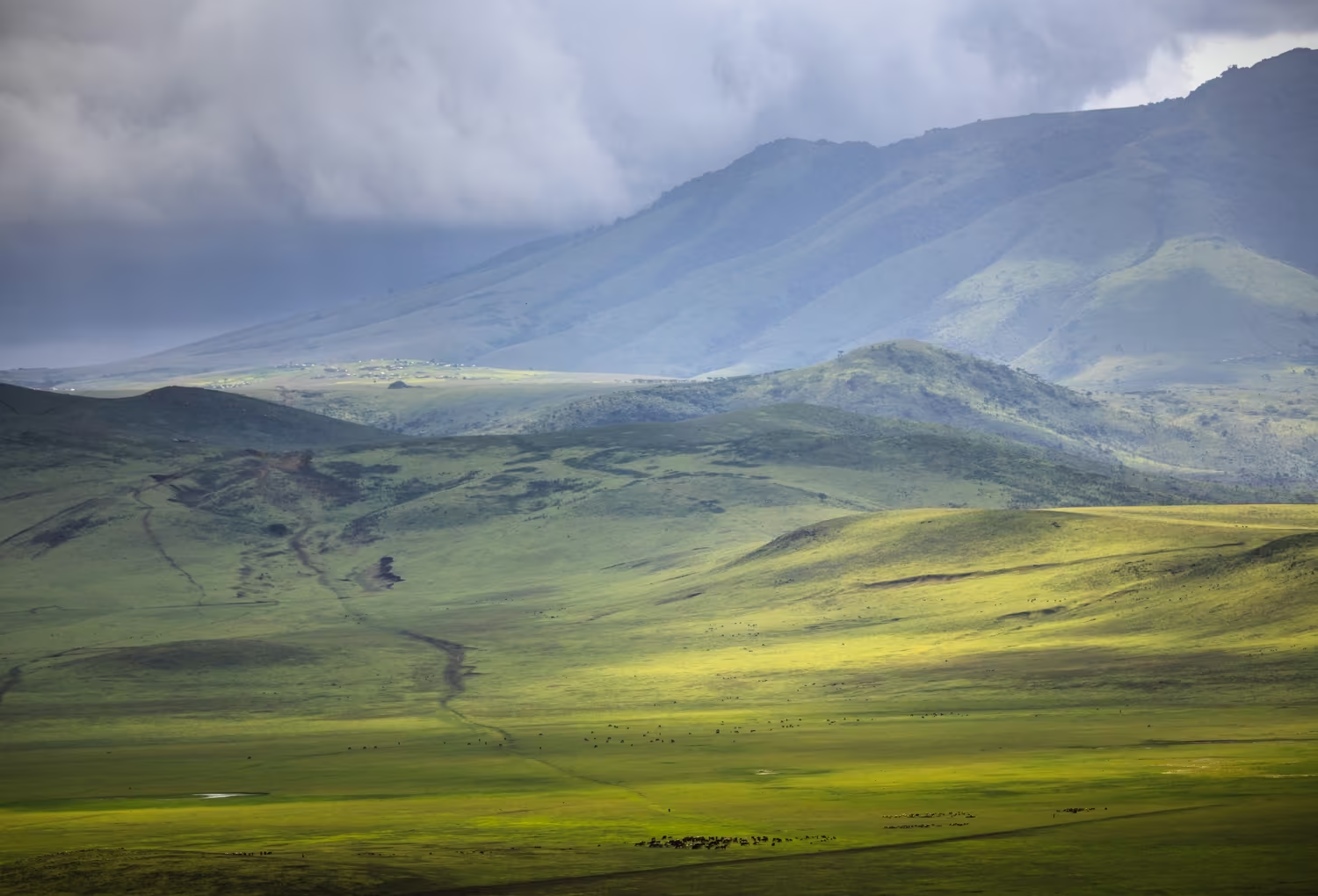
Rain is an essential part of Tanzania’s natural cycle, transforming dry landscapes into beautiful green wilderness. Tanzania’s rainfall patterns vary by region, but many northern and coastal areas experience a longer rainy period roughly between March and May, while shorter seasonal rains commonly occur around October through December.
Rain does not necessarily mean continuous rainfall throughout every day. Conditions can vary significantly depending on the destination, year, and local weather patterns.
Travelling during greener periods can offer:
- Beautiful green safari landscapes
- Excellent photographic scenery
- Fewer visitors in some destinations
- Good birdwatching opportunities
- Seasonal newborn wildlife in certain ecosystems
- A quieter atmosphere at selected safari destinations
Travellers should remember that heavy rainfall can occasionally affect road conditions and travel times, particularly in remote wildlife areas.
- Weather for Safari Kilimanjaro and Zanzibar
The best weather in Tanzania depends greatly on what you want to experience. Wildlife safaris, mountain climbing, and beach holidays each have different seasonal considerations.
For Mount Kilimanjaro climbing, weather becomes progressively colder with altitude. Climbers can begin their journey in relatively warm conditions and eventually encounter freezing temperatures, strong winds, and potentially snow or ice near the summit.
In Zanzibar and Tanzania’s coastal regions, conditions are typically warmer and more humid because of the Indian Ocean. Travellers can enjoy tropical temperatures suitable for beach holidays during much of the year, although rainfall and humidity vary seasonally.
When planning your journey, consider:
- Safari destinations and expected wildlife movements
- Mountain altitude and temperature changes
- Rainfall patterns during your travel month
- Coastal humidity and beach conditions
- Morning and evening temperatures
- Seasonal differences between northern, southern, western, and coastal Tanzania
This is particularly important when combining a Tanzania safari and Zanzibar beach holiday within one itinerary.
- Choosing the Best Time to Visit Tanzania
There is no single perfect month for every traveller because Tanzania is a year round travel destination. The best time depends on whether your priority is wildlife viewing, the Great Wildebeest Migration, mountain climbing, birdwatching, photography, quieter safari experiences, or relaxing beside the Indian Ocean.
The dry months are highly popular for classic wildlife safaris, while greener months can reveal lush landscapes, dramatic skies, abundant birdlife, and a different character of the wilderness. Wildlife movements such as the Great Wildebeest Migration in the Serengeti ecosystem are also dynamic and influenced by rainfall and grazing conditions rather than fixed calendar dates.
At Tansania Toll Safaris, we consider your preferred destinations, activities, travel dates, and expectations when helping you plan your journey from our base in Arusha, Tanzania.
Whether you dream of golden Serengeti plains beneath clear skies, emerald landscapes after the rains, the cool heights of Kilimanjaro, or warm tropical days in Zanzibar, every season reveals a different and beautiful side of Tanzania.
Your Tanzania Adventure Is Closer Than You Think
Let Us Create Your Perfect Tanzania Safari
Your dream of exploring Tanzania can begin with one simple conversation. Tell us when you would like to travel, how many people will join you and the experiences you hope to enjoy. Our safari specialists will prepare a personalized Tanzania travel proposal based on your interests, preferred accommodation, travel duration and budget. Whether you are planning a Serengeti wildlife safari, a Kilimanjaro climbing adventure, a romantic honeymoon, a family holiday or a complete Tanzania safari and Zanzibar beach experience, we are ready to guide you through every step of the planning process. Contact Tansania Toll Safaris today and begin creating a journey filled with wildlife, discovery, comfort and unforgettable African moments.
Read Reviews

Follow us
- Tansania Toll Safaris
- @tansaniatollsafaris
- Tansania Toll Safaris
- +255 765 148 724
- +255 765 148 724
- sales@tansaniatoll-safaris.de
- Arusha, Tanzania
We Accept