
Katavi National Park
Katavi National Park is one of Tanzania’s most remote, untamed and spectacular safari destinations, offering vast wilderness, dramatic seasonal floodplains, enormous buffalo herds, impressive elephant populations and some of the most intense hippo and crocodile concentrations in East Africa.
Located in western Tanzania, Katavi remains far removed from the country’s busiest safari routes. This isolation has helped preserve its authentic wilderness atmosphere, making it particularly attractive to travellers searching for off the beaten path Tanzania safaris, private wildlife experiences, photographic safaris and exclusive African wilderness adventures.
Unlike more frequently visited destinations such as Serengeti and Ngorongoro, Katavi receives relatively few visitors. This means wildlife sightings often feel private, safari roads remain quiet and the landscape retains a remarkable sense of isolation.
The park is especially famous during the dry season when shrinking rivers and seasonal wetlands force huge numbers of animals toward the remaining water sources. At this time, travellers may witness enormous herds of buffalo, elephants gathering around riverbeds, predators following prey and hundreds of hippos competing for limited space in shrinking pools.
For travellers planning a 2026 Tanzania safari, Katavi National Park is an outstanding destination for those who value wilderness, exclusivity, wildlife photography and authentic safari experiences far from large tourist crowds.
At Tansania Toll Safaris, based in Arusha, Tanzania, we create carefully planned Katavi safari experiences that combine remote wildlife encounters, professional guiding and seamless connections with other spectacular destinations in western Tanzania.
History of Katavi National Park
The Katavi region has long been valued for its abundant water sources, fertile seasonal floodplains and wildlife populations.
Before formal conservation protection, the wider landscape was used by surrounding communities for traditional activities and seasonal movement.
As conservation awareness increased, the ecological importance of Katavi became increasingly recognised, particularly because its floodplains and river systems supported enormous concentrations of wildlife.
Katavi was first protected during the twentieth century and later expanded considerably, creating the large national park travellers experience today.
The park’s protected status helped preserve:
- Major buffalo populations
- Elephant habitats
- Hippo breeding and feeding areas
- Crocodile populations
- Lion territories
- Seasonal wetlands
- Miombo woodland
- Important wildlife migration routes
- Bird habitats
Katavi’s relative isolation also played an important role in its conservation history.
Because the region remained less developed than many other parts of Tanzania, large areas of natural habitat survived with limited infrastructure.
Today, Katavi National Park represents one of Tanzania’s greatest remaining wilderness landscapes and plays an important role in protecting the ecological heritage of western Tanzania.
Geography Size and Ecology of Katavi National Park
Katavi National Park covers approximately 4,471 square kilometres, making it one of Tanzania’s significant protected wilderness areas.
The park contains an extraordinary variety of habitats, including:
- Seasonal floodplains
- Miombo woodland
- Dry grasslands
- River systems
- Marshes
- Seasonal lakes
- Acacia woodland
- Palm fringed waterways
- Savannah
Its ecology changes dramatically between the wet and dry seasons.
During the rainy season, floodplains expand and water becomes widely available. Wildlife disperses across the park and surrounding habitats.
During the dry season, water becomes increasingly scarce and animals gather around rivers, lakes and remaining pools.
This seasonal concentration creates exceptional game viewing.
Katuma River
The Katuma River is one of the most important ecological features within Katavi National Park.
During the dry season, the river becomes a critical water source for wildlife.
Travellers may observe:
- Elephants drinking
- Buffalo herds gathering near water
- Hippos occupying deep pools
- Crocodiles resting along riverbanks
- Lions waiting near animal pathways
- Antelopes approaching the river
The Katuma River is particularly famous for dramatic wildlife interactions during the driest months.
Chada Plain
The Chada Plain is one of Katavi’s most famous wildlife areas.
During the dry season, huge numbers of animals gather across this open floodplain.
The landscape may contain:
- Massive buffalo herds
- Elephants
- Zebras
- Antelopes
- Lions
- Hyenas
- Numerous bird species
For photographers, the Chada Plain provides some of the park’s most dramatic images.
Large buffalo herds stretching across open grassland beneath enormous African skies create the kind of classic safari scenery that defines remote western Tanzania.
Lake Katavi and Lake Chada
Seasonal lakes such as Lake Katavi and Lake Chada play important ecological roles.
During the wet season, these areas hold significant amounts of water and attract:
- Hippos
- Water birds
- Buffaloes
- Elephants
- Antelopes
- Crocodiles
As the dry season continues, water levels retreat dramatically.
This forces wildlife into increasingly smaller areas and creates intense concentrations around remaining pools.
Miombo Woodland
Large areas of Katavi contain miombo woodland, one of the most characteristic habitats of western and southern Tanzania.
This environment supports wildlife such as:
- Elephants
- Greater kudu
- Sable antelope
- Roan antelope
- Leopards
- Smaller mammals
- Numerous woodland birds
The woodland creates a beautiful contrast with the open floodplains and grasslands.
Wildlife of Katavi National Park
Katavi is especially famous for its large concentrations of wildlife during the dry season.
Common animals include:
- African elephant
- African buffalo
- Plains zebra
- Giraffe
- Impala
- Waterbuck
- Eland
- Hartebeest
- Greater kudu
- Sable antelope
- Roan antelope
- Warthog
- Hippopotamus
- Nile crocodile
Predators include:
- African lion
- Leopard
- Spotted hyena
- Jackal
- African wild dog within the wider ecosystem
The low number of safari vehicles means wildlife encounters often feel much more intimate than in heavily visited destinations.
Buffalo Herds of Katavi
One of Katavi’s greatest attractions is its enormous buffalo population.
During the dry season, buffaloes gather in impressive numbers around productive grazing grounds and permanent water sources.
Travellers may witness:
- Hundreds of buffalo moving together
- Large breeding herds
- Massive bulls
- Buffaloes entering wetlands
- Lions following herds
- Dust rising above moving animals
These encounters create some of the most powerful safari scenes in Tanzania.
Hippos of Katavi National Park
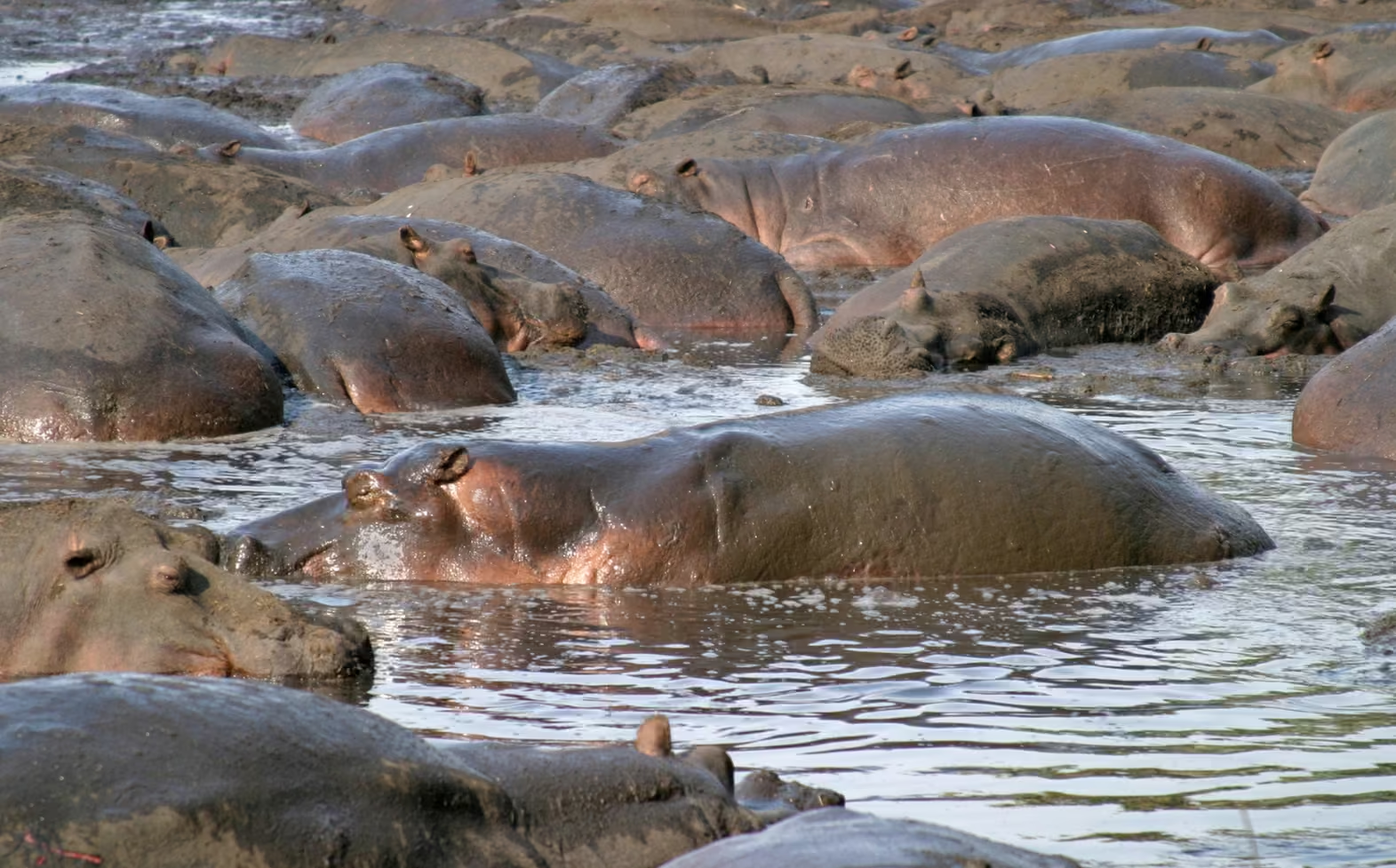
Katavi is famous for extraordinary concentrations of hippopotamuses.
As rivers and pools shrink during the dry season, large numbers of hippos may become crowded into limited areas.
Visitors may witness:
- Hundreds of hippos sharing pools
- Territorial behaviour
- Dominant males competing
- Mothers protecting calves
- Hippos leaving water at dusk
- Intense interactions caused by limited space
These scenes can be dramatic and provide outstanding wildlife photography opportunities.
Nile Crocodiles
The same shrinking rivers and pools attract large numbers of Nile crocodiles.
Crocodiles may be seen:
- Basking along riverbanks
- Resting in muddy pools
- Entering water
- Waiting near wildlife drinking areas
During the driest months, crocodiles and hippos may occupy the same limited waterways, creating powerful scenes of survival.
Lions and Other Predators
Katavi supports a healthy population of predators.
Lions are commonly associated with:
- Buffalo herds
- Open plains
- River systems
- Waterholes
- Dry riverbeds
Visitors may observe lions:
- Hunting
- Resting beneath trees
- Following buffalo herds
- Drinking near rivers
- Moving across floodplains
Leopards are more elusive and usually associated with woodland and riverine areas.
Spotted hyenas are also present and play an important role in the ecosystem.
Birdlife in Katavi National Park
Katavi is an excellent destination for bird watching safaris in western Tanzania.
Its combination of wetlands, rivers, woodland and grasslands creates habitat for hundreds of bird species.
Visitors may encounter:
- African fish eagles
- Storks
- Herons
- Egrets
- Kingfishers
- Bee eaters
- Hornbills
- Vultures
- Eagles
- Water birds
- Woodland species
Bird watching is particularly rewarding during wetter months when seasonal lakes and floodplains attract large numbers of aquatic birds.
Accessibility and How to Reach Katavi National Park
Katavi National Park is one of Tanzania’s most remote safari destinations.
This remoteness is part of what makes it special, but it means that travel must be planned carefully.
Travelling by Air
Flying is generally the easiest and most convenient way to reach Katavi.
Scheduled and charter flights may connect the park with major tourism centres depending on current operations.
Fly in safaris are particularly suitable for:
- Luxury travellers
- Honeymooners
- Wildlife photographers
- Travellers with limited time
- Katavi and Mahale combinations
Flying significantly reduces travel time and allows visitors to begin their safari quickly after arriving.
Travelling by Road
Katavi can also be reached by road, although journeys are long and adventurous.
Road access is more suitable for:
- Experienced overland travellers
- Adventure safari groups
- Long distance expeditions
- Extended western Tanzania itineraries
A reliable four wheel drive safari vehicle is essential.
Road conditions may vary significantly between seasons.
Travelling Through Mpanda
The town of Mpanda is one of the major gateways to Katavi National Park.
Travellers approaching by road or regional transport may pass through Mpanda before continuing into the park.
Best Time to Visit Katavi National Park
Katavi can be visited during much of the year, but the seasons strongly influence wildlife distribution and accessibility.
June to October
The dry season is generally considered the best time to visit Katavi National Park for wildlife viewing.
During these months:
- Seasonal wetlands begin shrinking
- Animals gather near permanent water
- Buffalo herds become concentrated
- Hippos gather in large numbers
- Predator activity increases
- Wildlife becomes easier to locate
- Roads are generally more accessible
This is the season when Katavi delivers its most dramatic safari experiences.
November to December
The short rains begin transforming the landscape.
Visitors may experience:
- Fresh green vegetation
- Excellent bird watching
- Fewer tourists
- Attractive photography
- Increasing water availability
Wildlife becomes more dispersed as new water sources appear.
January to February
The landscape remains lush during these months.
This period provides:
- Beautiful scenery
- Excellent birdlife
- Fewer safari vehicles
- Green season photography
Wildlife remains present but may be less concentrated than during the dry season.
March to May
The longer rainy season can make travel considerably more challenging.
Some camps may close temporarily.
Visitors should expect:
- Heavy rainfall
- Muddy roads
- High vegetation
- Difficult access to some areas
- Excellent birdlife
- Very few visitors
Travellers considering this period should carefully confirm accessibility and accommodation operations.
Common Activities in Katavi National Park
Katavi offers safari experiences focused on wildlife, wilderness and photography.
Game Drives
Katavi National Park game drives are the principal activity.
Visitors explore:
- Chada Plain
- Katuma River
- Seasonal lakes
- Miombo woodland
- Floodplains
- River systems
Game drives may reveal:
- Lions
- Buffaloes
- Elephants
- Hippos
- Crocodiles
- Zebras
- Antelopes
- Birdlife
Early morning and late afternoon drives are particularly rewarding.
Wildlife Photography
Katavi is one of Tanzania’s most rewarding destinations for serious safari photography.
Popular subjects include:
- Massive buffalo herds
- Hippo concentrations
- Lions hunting
- Elephants at waterholes
- Nile crocodiles
- Dust filled landscapes
- African sunsets
- Seasonal floodplains
- Woodland wildlife
One of Katavi’s greatest photographic advantages is the relatively low number of safari vehicles.
Photographers can sometimes spend extended periods observing wildlife without large crowds.
Bird Watching
Bird watching can be excellent throughout the park.
Specialist birding experiences may focus on:
- Wetland species
- Water birds
- Raptors
- Miombo woodland birds
- Migratory species
The green season is especially rewarding for bird enthusiasts.
Walking Safaris
Guided walking safaris may be available in selected areas depending on park regulations and camp arrangements.
Walking provides opportunities to learn about:
- Animal tracks
- Plants
- Insects
- Birdlife
- Smaller wildlife
- Ecosystems
- Traditional bush knowledge
Travellers should always participate with authorised professionals.
Wilderness Experiences
Perhaps Katavi’s greatest activity is simply experiencing the scale of the wilderness.
Visitors may spend hours exploring landscapes without encountering another safari vehicle.
This provides:
- Privacy
- Silence
- Uninterrupted wildlife observation
- Excellent photography
- Deep connection with nature
- Authentic safari atmosphere
For experienced safari travellers, this feeling of isolation is one of Katavi’s greatest attractions.
Accommodation Options in Katavi National Park
Accommodation in Katavi is relatively limited compared with Serengeti or Ngorongoro.
This limited development helps preserve the park’s remote atmosphere.
Luxury Safari Camps
Luxury safari camps offer high levels of comfort in remote wilderness locations.
Facilities may include:
- Spacious safari tents
- En suite bathrooms
- Private verandas
- Fine dining
- Campfire areas
- Personalised guiding
- Scenic wildlife views
These camps are ideal for:
- Luxury travellers
- Honeymooners
- Wildlife photographers
- Experienced safari visitors
- Couples seeking exclusivity
Tented Bush Camps
Tented bush camps provide an intimate African safari atmosphere.
Guests may enjoy:
- Comfortable tents
- Private bathrooms
- Outdoor dining
- Campfires
- Wildlife sounds at night
- Close access to productive wildlife areas
These properties are particularly attractive to travellers who prefer authentic wilderness over resort style accommodation.
Seasonal Camps
Some camps operate mainly during the dry season when wildlife viewing is most productive.
Seasonal camps can provide:
- Excellent wildlife locations
- Strong guiding
- Fewer guests
- Personalised experiences
- Great photography opportunities
Basic Accommodation and Campsites
Simpler accommodation may be available in and around the wider region.
Options may include:
- Public campsites
- Basic rest facilities
- Simple lodges around Mpanda
- Budget accommodation
These choices are suitable for adventurous travellers and overland safari groups.
Things to Consider Before Visiting Katavi
Katavi requires more logistical planning than many mainstream safari destinations.
Travellers should consider:
- Limited flight schedules
- Long distances by road
- Remote medical facilities
- Seasonal accommodation closures
- Limited mobile network coverage
- Hot conditions during the dry season
- Dust during peak dry months
- Difficult roads during the rainy season
- Limited large scale tourism infrastructure
These factors contribute to the sense of wilderness that makes Katavi special.
Combining Katavi With Other Tanzania Destinations
Katavi combines exceptionally well with other western Tanzania attractions.
Popular combinations include:
- Katavi and Mahale Mountains National Park
- Katavi and Gombe Stream National Park
- Katavi and Lake Tanganyika
- Katavi and Kigoma
- Katavi and Ruaha National Park
- Katavi and Zanzibar
Katavi and Mahale Mountains National Park
A Katavi and Mahale safari is one of Tanzania’s most exclusive wilderness journeys.
Katavi offers:
- Buffalo herds
- Lions
- Elephants
- Hippos
- Crocodiles
- Remote savannah
Mahale adds:
- Chimpanzee trekking
- Tropical forest
- Mountain hiking
- Lake Tanganyika
- Lakeside relaxation
Together, they create one of Tanzania’s greatest western safari and primate adventures.
Katavi and Gombe Stream National Park
Travellers interested in primates can combine Katavi with Gombe.
The itinerary may include:
- Big game safaris
- Chimpanzee trekking
- Forest hiking
- Lake Tanganyika
- Wildlife photography
This journey is especially suitable for adventurous travellers seeking a less conventional Tanzania safari.
Katavi and Zanzibar
After several days exploring remote wilderness, visitors can continue to Zanzibar for relaxation.
This creates a remarkable Tanzania safari and Zanzibar holiday combining:
- Remote wildlife
- Luxury safari camps
- Indian Ocean beaches
- Swahili culture
- Tropical relaxation
Why Visit Katavi National Park
Katavi is ideal for travellers seeking an uncompromising wilderness safari.
Reasons to visit include:
- Enormous buffalo herds
- Exceptional hippo concentrations
- Large elephant populations
- Excellent lion sightings
- Nile crocodiles
- Beautiful floodplains
- Very few safari vehicles
- Outstanding wildlife photography
- Authentic bush camps
- Excellent bird watching
- Remote western Tanzania wilderness
- Excellent combination with Mahale Mountains
- One of Tanzania’s least crowded major wildlife destinations
For travellers who value privacy, wildlife and wilderness over convenience, Katavi is one of the most rewarding destinations in Africa.
Plan Your Katavi Safari With Tansania Toll Safaris
There are still places in Africa where the horizon feels endless, where wildlife gathers without crowds and where the only sounds are distant lions, birds and the movement of animals through dry grass.
Katavi National Park is one of those places.
Here, enormous buffalo herds spread across the Chada Plain, elephants gather beside shrinking rivers and hundreds of hippos compete for the last pools of water as the dry season reaches its peak.
At Tansania Toll Safaris, based in Arusha, Tanzania, we create personalised Katavi National Park safari tours for travellers searching for exclusive wildlife encounters, remote wilderness and unforgettable western Tanzania adventures.
Whether you are planning a dedicated Katavi safari, a Katavi and Mahale luxury journey, a photographic safari or a complete Tanzania wilderness and Zanzibar holiday, our team can create an itinerary around your travel dates, interests and preferred level of comfort.
Your Katavi safari can include:
- Domestic and charter flight arrangements
- Professional Tanzania safari guides
- Private game drives
- Wildlife photography safaris
- Bird watching experiences
- Walking safaris where available
- Carefully selected safari camps
- Mahale Mountains National Park extensions
- Gombe Stream National Park combinations
- Lake Tanganyika experiences
- Ruaha National Park extensions
- Zanzibar beach holiday combinations
From the thundering movement of buffalo herds across open floodplains to the dramatic gatherings of hippos along the Katuma River, Katavi National Park delivers one of the wildest and most exclusive safari experiences in Tanzania.
Travel with Tansania Toll Safaris and discover Katavi National Park, where remote landscapes, dramatic wildlife and the timeless spirit of Africa create a safari that remains unforgettable long after the journey ends.
Your Tanzania Adventure Is Closer Than You Think
Let Us Create Your Perfect Tanzania Safari
Your dream of exploring Tanzania can begin with one simple conversation. Tell us when you would like to travel, how many people will join you and the experiences you hope to enjoy. Our safari specialists will prepare a personalized Tanzania travel proposal based on your interests, preferred accommodation, travel duration and budget. Whether you are planning a Serengeti wildlife safari, a Kilimanjaro climbing adventure, a romantic honeymoon, a family holiday or a complete Tanzania safari and Zanzibar beach experience, we are ready to guide you through every step of the planning process. Contact Tansania Toll Safaris today and begin creating a journey filled with wildlife, discovery, comfort and unforgettable African moments.
Read Reviews

Follow us
- Tansania Toll Safaris
- @tansaniatollsafaris
- Tansania Toll Safaris
- +255 765 148 724
- +255 765 148 724
- sales@tansaniatoll-safaris.de
- Arusha, Tanzania
We Accept