
Selous Game Reserve (Nyerere National Park)
Selous Game Reserve and Nyerere National Park form one of the greatest wilderness regions in Africa, offering vast landscapes, powerful rivers, abundant wildlife and a safari atmosphere that feels remote, authentic and deeply connected to nature.
Located in southern Tanzania, this enormous ecosystem is known for its Rufiji River, expansive miombo woodland, lakes, channels, floodplains, elephants, buffaloes, lions, hippos, crocodiles and African wild dogs.
Today, travellers will often hear the names Selous Game Reserve and Nyerere National Park used together because of the historical relationship between the two areas. A substantial northern portion of the former Selous Game Reserve was designated as Nyerere National Park, while other areas continue under the Selous Game Reserve name.
For tourism, Nyerere National Park now represents one of the principal safari destinations within this legendary southern Tanzania wilderness.
Unlike many national parks where safari activities are centred mainly around vehicle game drives, Nyerere offers a broader collection of experiences. Visitors can enjoy traditional game drives as well as boat safaris on the Rufiji River and guided walking safaris in designated areas.
This diversity makes Nyerere one of the best destinations for travellers planning a 2026 Southern Tanzania safari, especially those searching for fewer crowds, authentic wilderness, luxury tented camps and exceptional wildlife photography.
At Tansania Toll Safaris, based in Arusha, Tanzania, we create personalised Nyerere National Park and Southern Tanzania safari itineraries designed around wildlife, adventure, comfort and unforgettable encounters with Africa’s wilderness.
History of Selous Game Reserve and Nyerere National Park
The history of this protected landscape stretches back more than a century and represents an important chapter in Tanzania’s conservation story.
The wider Selous ecosystem was gradually placed under protection during the early twentieth century. Over the years, different conservation areas were combined and expanded, eventually creating one of the largest protected wilderness regions in Africa.
The reserve was named Selous Game Reserve in connection with Frederick Courteney Selous, an explorer and hunter associated with the region during the colonial period.
As Tanzania’s conservation priorities evolved, the area became increasingly important for the protection of elephants, African wild dogs, lions, buffaloes and many other species.
A major change occurred when a large northern section of the historic Selous Game Reserve was established as Nyerere National Park, named in honour of Mwalimu Julius Kambarage Nyerere, Tanzania’s founding president.
The creation of Nyerere National Park placed one of the most important photographic tourism areas within national park management while preserving the wider ecological relationship with the remaining Selous landscape.
Important elements of its conservation history include:
- Protection of vast southern Tanzania wilderness
- Conservation of the Rufiji River ecosystem
- Protection of elephant and buffalo habitats
- Conservation of African wild dog populations
- Preservation of large predator territories
- Protection of miombo woodland
- Conservation of wetlands, lakes and river channels
- Development of photographic safari tourism
- Preservation of important wildlife migration and dispersal areas
Today, Nyerere National Park and the broader Selous ecosystem remain central to the conservation of southern Tanzania’s wildlife.
Geography Size and Ecology of the Selous and Nyerere Ecosystem
The wider Selous ecosystem is enormous, covering tens of thousands of square kilometres across southern Tanzania.
Within this landscape, Nyerere National Park covers more than 30,000 square kilometres, making it one of the largest national parks in Africa.
The environment contains remarkable ecological diversity.
Major habitats include:
- Miombo woodland
- Open grasslands
- Riverine forest
- Floodplains
- Seasonal wetlands
- Lakes
- River channels
- Palm woodland
- Dry bushland
- Savannah
This variety provides habitat for an extraordinary range of wildlife.
The Rufiji River
The Rufiji River is the ecological heart of Nyerere National Park and one of the most important river systems in Tanzania.
It creates a network of channels, lakes, sandbanks and wetlands that support wildlife throughout the year.
Visitors exploring the Rufiji may encounter:
- Hippopotamuses
- Nile crocodiles
- Elephants drinking along the banks
- Buffaloes
- Waterbuck
- Monkeys
- African fish eagles
- Kingfishers
- Herons
- Numerous water birds
The Rufiji River gives Nyerere a safari character that differs dramatically from the open plains of northern Tanzania.
Instead of observing wildlife only from a vehicle, travellers can experience the wilderness from the water.
Lakes and Wetlands
The Rufiji system feeds numerous lakes and seasonal wetlands.
These environments attract wildlife and birds, particularly during the dry season when water becomes increasingly important.
Lakes and wetlands provide habitat for:
- Hippos
- Crocodiles
- Water birds
- Elephants
- Buffaloes
- Antelopes
- Predators searching for prey
These areas are especially productive for wildlife photography.
Miombo Woodland
Large sections of the park consist of miombo woodland, one of the most characteristic ecosystems of southern Tanzania.
Miombo provides habitat for:
- Elephants
- African wild dogs
- Greater kudu
- Sable antelope
- Lions
- Leopards
- Numerous bird species
The woodland creates a completely different atmosphere from the short grass plains of Serengeti.
Wildlife encounters may require patience, but the reward is a genuine wilderness experience with very few other vehicles.
Wildlife of Nyerere National Park
Nyerere National Park is home to an extraordinary diversity of wildlife.
The size of the ecosystem allows animals to move across vast territories according to seasonal water and food availability.
Common wildlife includes:
- African elephant
- African buffalo
- Giraffe
- Plains zebra
- Wildebeest
- Waterbuck
- Impala
- Greater kudu
- Eland
- Warthog
- Hippopotamus
- Nile crocodile
Predators include:
- African lion
- African wild dog
- Leopard
- Spotted hyena
- Jackal
The park is particularly valuable for travellers who want to experience wildlife in a more remote setting.
African Wild Dogs
One of Nyerere National Park’s most celebrated animals is the African wild dog.
These highly social predators live in packs and are among Africa’s most fascinating carnivores.
Wild dogs may travel long distances while hunting, making sightings unpredictable but exceptionally rewarding.
Visitors fortunate enough to encounter them may observe:
- Pack interactions
- Coordinated hunting behaviour
- Adults caring for younger animals
- Social greeting rituals
- Packs resting together
Nyerere and the surrounding southern Tanzania wilderness have historically represented an important stronghold for this endangered species.
For wildlife enthusiasts, seeing African wild dogs can become one of the highlights of a Tanzania safari.
Lions and Other Predators
Nyerere supports a substantial predator population.
Lions can be encountered around:
- River systems
- Open grasslands
- Lakes
- Woodland edges
- Areas containing large concentrations of herbivores
Leopards are more elusive and commonly associated with woodland and riverine environments.
Spotted hyenas are also present throughout the ecosystem.
Predator viewing is particularly rewarding during the dry season when animals gather closer to permanent water sources.
Elephants and Buffaloes
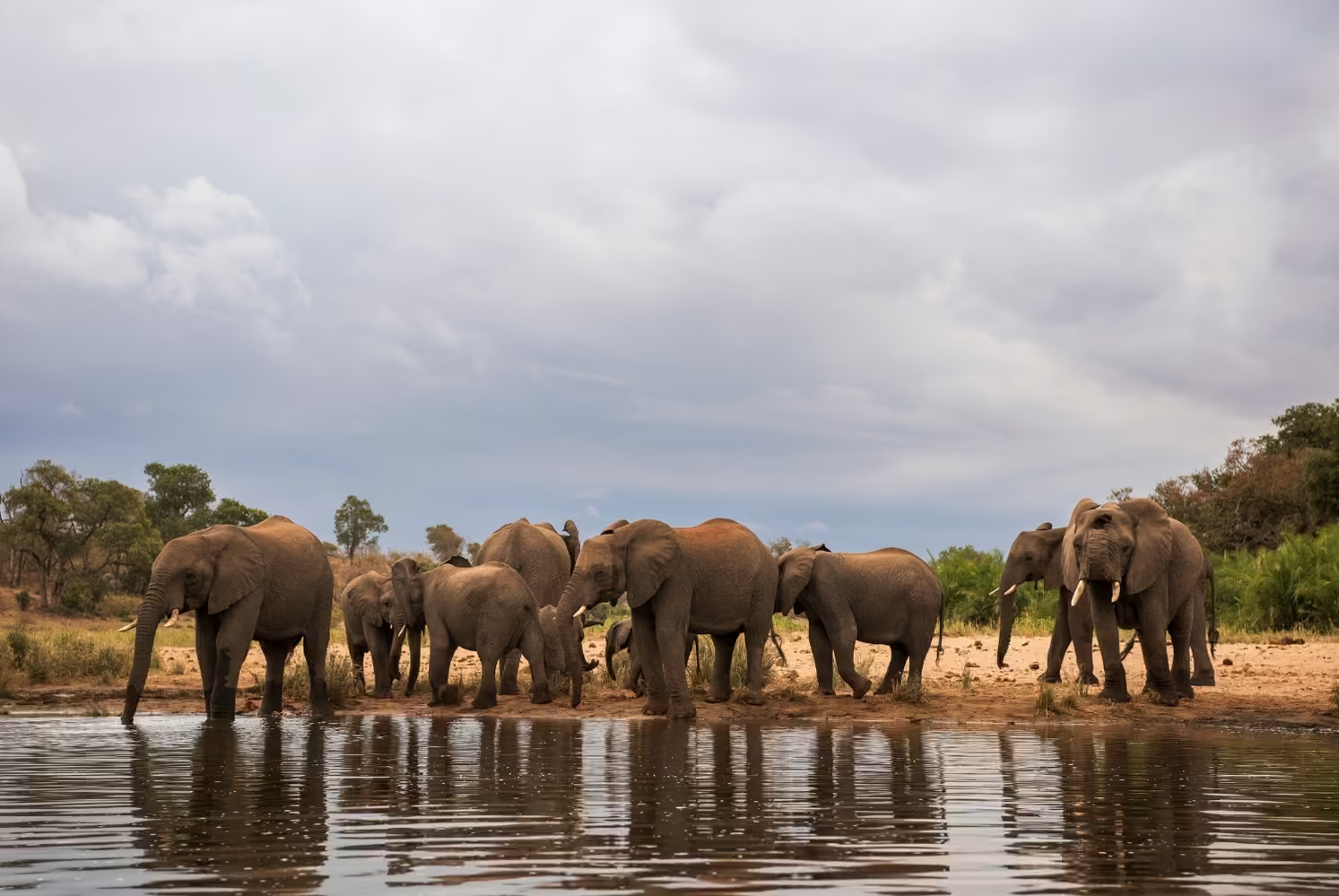
Elephants are among the iconic animals of southern Tanzania.
Visitors may encounter:
- Family herds
- Large bulls
- Mothers with calves
- Elephants drinking from the Rufiji River
- Animals crossing open plains
- Herds feeding in woodland
Large groups of buffaloes may also be observed, particularly near productive grazing areas and water.
The combination of buffalo herds, lions and large wilderness landscapes creates classic African safari scenes.
Hippos and Crocodiles
The extensive river and lake systems support impressive populations of hippos and Nile crocodiles.
Boat safaris provide excellent opportunities to observe them safely.
Travellers may see:
- Hippos resting in channels
- Groups of hippos surfacing together
- Crocodiles basking on sandbanks
- Crocodiles entering the river
- Water birds feeding nearby
These encounters are one of the major differences between a Nyerere safari and a traditional northern Tanzania itinerary.
Birdlife in Nyerere National Park
Nyerere is an outstanding destination for bird watching safaris in Tanzania.
The combination of woodland, rivers, wetlands and lakes supports hundreds of bird species.
Bird enthusiasts may encounter:
- African fish eagles
- Kingfishers
- Bee eaters
- Hornbills
- Herons
- Egrets
- Storks
- Vultures
- Eagles
- Weaver birds
- Waterfowl
- Raptors
Boat safaris along the Rufiji River are particularly rewarding for bird photography.
Travellers visiting during greener months may also experience increased bird activity and seasonal migrants.
Accessibility and How to Reach Nyerere National Park
Nyerere National Park can be reached by both air and road.
Because the park is enormous, travel arrangements should be planned according to the specific camp or safari area being visited.
Travelling by Air
Flying is one of the most convenient ways to reach Nyerere.
Scheduled and charter flights may connect the park with major tourism centres such as:
- Dar es Salaam
- Zanzibar
- Other southern Tanzania safari destinations
Flying is especially suitable for:
- Luxury travellers
- Honeymooners
- Short safari holidays
- Photographers
- Safari and Zanzibar combinations
- Travellers connecting Nyerere with Ruaha
Flights allow visitors to reach remote safari camps without spending many hours travelling overland.
Travelling From Dar es Salaam
Nyerere can also be accessed by road from Dar es Salaam.
Journey times vary considerably depending on the destination within the park, selected route and road conditions.
Road travel is suitable for travellers seeking:
- Overland safari adventures
- Private vehicle safaris
- Longer Southern Tanzania itineraries
- Budget conscious safari arrangements
Four wheel drive vehicles are generally recommended.
Travelling From Zanzibar
Nyerere is one of the most attractive safari destinations for travellers staying in Zanzibar.
Air connections can make it possible to combine tropical beaches with an authentic mainland safari.
This creates one of Tanzania’s most appealing Zanzibar and Nyerere safari combinations.
Travellers can spend several days relaxing in Zanzibar before flying directly into the wilderness for game drives, boat safaris and wildlife experiences.
Best Time to Visit Nyerere National Park
Nyerere National Park can be visited during much of the year, although seasonal changes strongly influence wildlife viewing, road access and safari activities.
June to October
The dry season is generally considered one of the best times to visit Nyerere National Park for wildlife viewing.
As temporary water sources disappear, animals increasingly gather around:
- Rufiji River
- Lakes
- Permanent pools
- Wetlands
This makes wildlife easier to locate.
Visitors may enjoy:
- Excellent elephant sightings
- Large buffalo herds
- Predator activity
- Hippos and crocodiles
- African wild dog opportunities
- Excellent boat safaris
- Comfortable safari weather
This period is particularly popular for wildlife photography.
November to December
Short rains begin to refresh the landscape.
Vegetation becomes greener and birdlife becomes increasingly active.
Advantages include:
- Fresh scenery
- Fewer travellers
- Good wildlife viewing
- Excellent bird watching
- Attractive photography
January to February
These months can provide rewarding green season safaris.
Wildlife becomes more dispersed because water is more widely available, but the landscape is beautiful and birdlife is excellent.
This period suits travellers seeking:
- Quiet safaris
- Green landscapes
- Bird watching
- Photography
- Lower visitor numbers
March to May
The longer rainy season occurs during this period.
Heavy rainfall can make some roads difficult and some safari camps may close temporarily.
Travellers should expect:
- Lush landscapes
- High vegetation
- Excellent birdlife
- Fewer visitors
- Variable accessibility
Accommodation and transport arrangements should be confirmed carefully for rainy season travel.
Common Activities in Nyerere National Park
One of the greatest advantages of Nyerere National Park is the variety of safari activities available.
Game Drives
Traditional Nyerere National Park game drives remain an important part of the experience.
Visitors explore woodland, lakes, river systems and open areas in four wheel drive safari vehicles.
Game drives may reveal:
- Lions
- Elephants
- Buffaloes
- African wild dogs
- Giraffes
- Antelopes
- Hippos
- Birdlife
Early morning and late afternoon drives provide excellent opportunities for predator sightings and photography.
Rufiji River Boat Safaris
A Rufiji River boat safari is one of the signature experiences of Nyerere National Park.
Travelling quietly along the river allows visitors to observe wildlife from a completely different perspective.
Possible sightings include:
- Hippos
- Crocodiles
- Elephants
- Buffaloes
- Monkeys
- Waterbuck
- African fish eagles
- Kingfishers
- Herons
- Other water birds
Sunset boat safaris can be particularly beautiful as golden light spreads across the water.
Walking Safaris
Guided walking safaris in Nyerere National Park offer a deeper connection with the African wilderness.
Instead of focusing only on large animals, walking safaris introduce visitors to:
- Animal tracks
- Plants
- Insects
- Bird calls
- Smaller wildlife
- Animal behaviour
- Bush ecology
Walking safaris are generally conducted with appropriately qualified professionals and according to park regulations.
Wildlife Photography
Nyerere is an exceptional destination for photographers because of its diversity of environments.
Popular photography subjects include:
- Elephants along the Rufiji River
- Hippos in water
- Crocodiles on sandbanks
- African wild dog packs
- Lions around lakes
- Buffalo herds
- Colourful birds
- Reflections on the river
- African sunsets
The lower number of safari vehicles compared with some major northern parks can make photography particularly rewarding.
Bird Watching
Bird watching can be enjoyed during:
- Game drives
- Boat safaris
- Walking safaris
- Camp based nature experiences
The river systems provide especially good opportunities for photographing water birds.
Fishing Experiences
Selected lodges and camps may offer regulated fishing activities in appropriate areas and according to current rules.
These experiences can provide another way to enjoy the Rufiji River ecosystem.
Availability depends on location, season and regulations.
Accommodation Options in Nyerere National Park
Nyerere National Park offers accommodation ranging from exclusive luxury camps to intimate tented properties and simpler safari options.
Because the park is so large, the location of accommodation can significantly influence the safari experience.
Luxury Safari Camps
Luxury camps provide premium accommodation in remote wilderness environments.
Facilities may include:
- Spacious safari tents or suites
- En suite bathrooms
- Private verandas
- Swimming pools
- Fine dining
- River or lake views
- Personalised guiding
- Boat safari arrangements
These camps are ideal for:
- Honeymoon travellers
- Luxury safari holidays
- Photographers
- Couples
- Private family safaris
Luxury Tented Camps
Luxury tented accommodation combines the atmosphere of a traditional African safari with modern comfort.
Guests may enjoy:
- Comfortable beds
- Private bathrooms
- Outdoor decks
- Campfire evenings
- Fine dining
- Wildlife views
- Personalised safari activities
Sleeping beneath canvas while listening to hippos, lions and other wildlife can become one of the most memorable parts of a Nyerere safari.
Mid Range Safari Camps
Mid range properties offer comfortable accommodation and excellent access to wildlife areas.
These are suitable for:
- Couples
- Families
- Small groups
- Private safari travellers
- Longer Southern Tanzania itineraries
Seasonal Camps
Some safari camps operate mainly during the best wildlife viewing months.
Seasonal camps can be positioned close to productive wildlife areas and offer intimate safari experiences.
Budget and Camping Options
More affordable accommodation and camping may be available depending on the area and itinerary.
These options can suit:
- Adventure travellers
- Students
- Budget groups
- Overland safari travellers
Things to Consider Before Visiting Nyerere National Park
Nyerere is an enormous wilderness destination, and good planning is important.
Travellers should consider:
- Large distances within the park
- Seasonal road conditions
- Camp locations
- Domestic flight schedules
- Remote medical facilities
- Hot dry season conditions
- Rainy season camp closures
- Activity availability
- Suitable clothing for boat and walking safaris
Choosing the right accommodation area is particularly important because different parts of the park provide different wildlife and activity experiences.
Combining Nyerere With Other Tanzania Destinations
Nyerere is one of the most versatile destinations for Southern Tanzania safari combinations.
Popular combinations include:
- Nyerere National Park and Ruaha National Park
- Nyerere and Mikumi National Park
- Nyerere and Udzungwa Mountains National Park
- Nyerere and Saadani National Park
- Nyerere and Dar es Salaam
- Nyerere and Zanzibar
Nyerere and Ruaha National Park
Combining Nyerere with Ruaha National Park creates one of Tanzania’s finest Southern Circuit safaris.
Nyerere offers:
- Boat safaris
- Rufiji River
- African wild dogs
- Elephants
- Hippos
- Crocodiles
Ruaha adds:
- Large lion populations
- Baobab landscapes
- Elephants
- Buffaloes
- Remote wilderness
Together, they create an exceptional luxury Southern Tanzania safari.
Nyerere and Mikumi National Park
This combination provides excellent variety for travellers wanting a multi park safari.
Mikumi offers accessible savannah wildlife, while Nyerere introduces visitors to larger wilderness landscapes, rivers and boat safaris.
Nyerere and Zanzibar
One of the most popular combinations is a Nyerere safari and Zanzibar beach holiday.
Travellers can spend several days exploring the African wilderness before flying to Zanzibar for relaxation beside the Indian Ocean.
The combination offers:
- Game drives
- Boat safaris
- Wildlife photography
- African wilderness
- Stone Town culture
- Tropical beaches
- Snorkelling and ocean activities
This is particularly attractive for honeymooners, couples and families.
Why Visit Nyerere National Park
Nyerere is ideal for travellers searching for an authentic safari experience away from heavily travelled routes.
Reasons to visit include:
- One of Africa’s largest national park wilderness areas
- The spectacular Rufiji River
- Excellent African wild dog opportunities
- Large elephant and buffalo populations
- Lions and other predators
- Hippos and crocodiles
- Boat safaris
- Walking safaris
- Excellent bird watching
- Outstanding wildlife photography
- Fewer safari vehicles than many famous parks
- Luxury wilderness camps
- Easy combination with Zanzibar
- Excellent connection with Ruaha
The combination of land and water based activities makes Nyerere particularly distinctive among Tanzania’s leading safari destinations.
Plan Your Nyerere National Park Safari With Tansania Toll Safaris
There are few places where an African safari can begin among elephants in woodland, continue beside lions on an open plain and end quietly on the Rufiji River as hippos rise from the water beneath a glowing sunset.
Nyerere National Park offers exactly that kind of journey.
This is a wilderness of rivers, lakes, forests and endless horizons where safari feels adventurous, uncrowded and deeply connected to nature.
At Tansania Toll Safaris, based in Arusha, Tanzania, we create personalised Nyerere National Park safari tours for travellers seeking wildlife, river adventures, luxury wilderness camps and unforgettable Southern Tanzania experiences.
Whether you are planning a Nyerere safari from Dar es Salaam, a Zanzibar and Nyerere holiday, a luxury honeymoon safari, a photographic adventure or a complete Southern Tanzania safari combining Nyerere and Ruaha, our team can create a journey around your interests and travel style.
Your Nyerere adventure can include:
- Private game drives
- Professional Tanzania safari guides
- Rufiji River boat safaris
- Walking safari experiences where available
- Wildlife photography
- Bird watching
- Domestic flight arrangements
- Carefully selected safari lodges and camps
- Dar es Salaam transfers
- Ruaha National Park extensions
- Mikumi National Park combinations
- Udzungwa Mountains extensions
- Saadani National Park combinations
- Zanzibar beach holiday extensions
From African wild dogs moving through the woodland to elephants drinking beside the Rufiji River and hippos calling beneath the evening sky, Nyerere National Park captures the wild and timeless spirit of Southern Tanzania.
Travel with Tansania Toll Safaris and discover the legendary Selous and Nyerere wilderness, where rivers, wildlife and enormous African landscapes come together to create one of Tanzania’s most unforgettable safari experiences.
Your Tanzania Adventure Is Closer Than You Think
Let Us Create Your Perfect Tanzania Safari
Your dream of exploring Tanzania can begin with one simple conversation. Tell us when you would like to travel, how many people will join you and the experiences you hope to enjoy. Our safari specialists will prepare a personalized Tanzania travel proposal based on your interests, preferred accommodation, travel duration and budget. Whether you are planning a Serengeti wildlife safari, a Kilimanjaro climbing adventure, a romantic honeymoon, a family holiday or a complete Tanzania safari and Zanzibar beach experience, we are ready to guide you through every step of the planning process. Contact Tansania Toll Safaris today and begin creating a journey filled with wildlife, discovery, comfort and unforgettable African moments.
Read Reviews

Follow us
- Tansania Toll Safaris
- @tansaniatollsafaris
- Tansania Toll Safaris
- +255 765 148 724
- +255 765 148 724
- sales@tansaniatoll-safaris.de
- Arusha, Tanzania
We Accept