
Serengeti National Park
Serengeti National Park is one of the most famous wildlife destinations in Africa and one of the greatest places on earth to experience an authentic Tanzania safari. Located in northern Tanzania, the Serengeti is celebrated for its immense open plains, extraordinary concentration of wildlife, dramatic predator sightings and the world famous Great Wildebeest Migration.
The name Serengeti is commonly associated with the idea of endless plains, and the landscape lives up to that image. Golden grasslands stretch toward distant horizons while rocky kopjes, seasonal rivers, acacia woodlands and scattered forests create a remarkably diverse ecosystem supporting millions of animals.
For travellers planning a 2026 Tanzania safari, Serengeti National Park remains one of the most highly recommended safari destinations in East Africa. Visitors can witness huge herds of wildebeest and zebras, prides of lions resting beneath acacia trees, cheetahs scanning the plains, elephants moving between woodlands and countless other wildlife encounters throughout the year.
A safari in Serengeti National Park is not simply about seeing animals. It is about experiencing one of the world’s greatest surviving natural ecosystems in action.
At Tansania Toll Safaris, based in Arusha, Tanzania, we create carefully designed Serengeti safari experiences combining exceptional wildlife viewing, comfortable accommodation, knowledgeable safari guides and seamless travel across Tanzania’s famous Northern Safari Circuit.
History of Serengeti National Park
The Serengeti region has been inhabited and used by people for generations, including pastoral communities who moved through its surrounding landscapes with their livestock. However, the extraordinary wildlife concentrations of the region eventually led to increasing conservation interest.
During the twentieth century, formal conservation measures were introduced to protect the Serengeti ecosystem from excessive hunting and increasing human pressure.
Serengeti National Park was officially established in 1951, making it one of Tanzania’s oldest and most historically important national parks.
The creation and development of the park played a major role in protecting one of the world’s most significant wildlife ecosystems. Conservation efforts have helped preserve large populations of wildebeest, zebras, gazelles, lions, cheetahs, leopards, elephants and many other species.
Over the decades, Serengeti National Park became internationally recognised as a symbol of African wildlife conservation and one of the world’s premier safari destinations.
Today, the park is especially famous for protecting the extraordinary annual movement of wildebeest and zebras known as the Great Migration.
Important aspects of Serengeti’s history and conservation include:
- Protection of one of Africa’s largest wildlife populations
- Preservation of major predator and herbivore habitats
- Conservation of important migration corridors
- Protection of river systems and seasonal grazing grounds
- Growth of responsible wildlife tourism
- Scientific research into predator and herbivore relationships
- Cooperation with surrounding conservation areas and local communities
For modern travellers, the result is an extraordinary opportunity to experience African wildlife in landscapes that still feel immense, natural and untamed.
Geography Size and Ecology of Serengeti National Park
Serengeti National Park covers approximately 14,763 square kilometres, making it one of Tanzania’s largest and most ecologically significant protected areas.
The park forms the central part of the wider Serengeti ecosystem, which extends beyond the park boundaries into surrounding conservation areas and across the border into Kenya.
Its vast size creates a variety of landscapes and habitats, each supporting different wildlife populations and safari experiences.
Southern Serengeti Plains
The southern plains are characterised by expansive short grass landscapes. These areas become particularly important during the green season when large numbers of wildebeest gather to feed and give birth.
The southern Serengeti and neighbouring Ndutu region are especially famous for wildebeest calving season safaris.
Central Serengeti
The central section, often known as the Seronera area, is one of the richest wildlife viewing regions in the park.
Permanent water sources and diverse vegetation support wildlife throughout the year. Central Serengeti is particularly famous for:
- Lions
- Leopards
- Cheetahs
- Elephants
- Giraffes
- Buffalo
- Hyenas
- Antelopes
- Large numbers of resident plains game
For first time visitors, Central Serengeti is often an excellent choice because wildlife can be seen throughout most seasons.
Western Corridor
The western region of the Serengeti contains woodlands, open grasslands and important river systems.
The Grumeti River is one of the major geographical features of this region and plays an important role during parts of the Great Migration.
Wildlife in the Western Corridor includes large herds of wildebeest, hippos, crocodiles, elephants, predators and numerous plains animals.
Northern Serengeti
Northern Serengeti is characterised by rolling grasslands, hills, woodland and the famous Mara River.
During the migration season, enormous wildebeest herds may attempt dramatic river crossings while crocodiles wait in the water and predators patrol surrounding landscapes.
The northern section is particularly attractive for travellers seeking:
- Great Migration river crossing safaris
- Fewer safari vehicles in selected areas
- Remote wilderness experiences
- Beautiful rolling scenery
- Excellent predator sightings
Serengeti Kopjes
One of the most distinctive features of the Serengeti landscape is the presence of ancient rocky formations known as kopjes.
These granite outcrops rise above the surrounding plains and provide important habitats for wildlife.
Lions frequently rest on kopjes because they provide shade and elevated viewpoints. Leopards, reptiles and smaller mammals can also be found around these rocky formations.
Wildlife of Serengeti National Park
The extraordinary concentration and diversity of wildlife is the main reason Serengeti National Park has become one of the world’s most famous safari destinations.
Travellers visiting the Serengeti have opportunities to see the Big Five, although rhino sightings are considerably rarer than sightings of the other major species.
Common wildlife includes:
- African lion
- African elephant
- Cape buffalo
- Leopard
- Black rhinoceros in selected areas
- Cheetah
- Spotted hyena
- Wildebeest
- Plains zebra
- Thomson’s gazelle
- Grant’s gazelle
- Topi
- Hartebeest
- Eland
- Giraffe
- Hippopotamus
- Crocodile
- Warthog
- Jackal
- Serval
- Bat eared fox
- Numerous smaller mammals
The Serengeti is especially famous for its large predator population.
Lion prides are commonly observed throughout many areas of the park, while cheetahs favour open plains where they can use their speed to hunt.
Leopards are often associated with riverine woodland and acacia trees, particularly in Central Serengeti.
The Great Wildebeest Migration
The Great Wildebeest Migration is one of the most spectacular wildlife events on earth and one of the main reasons travellers choose Serengeti National Park for their Tanzania safari.
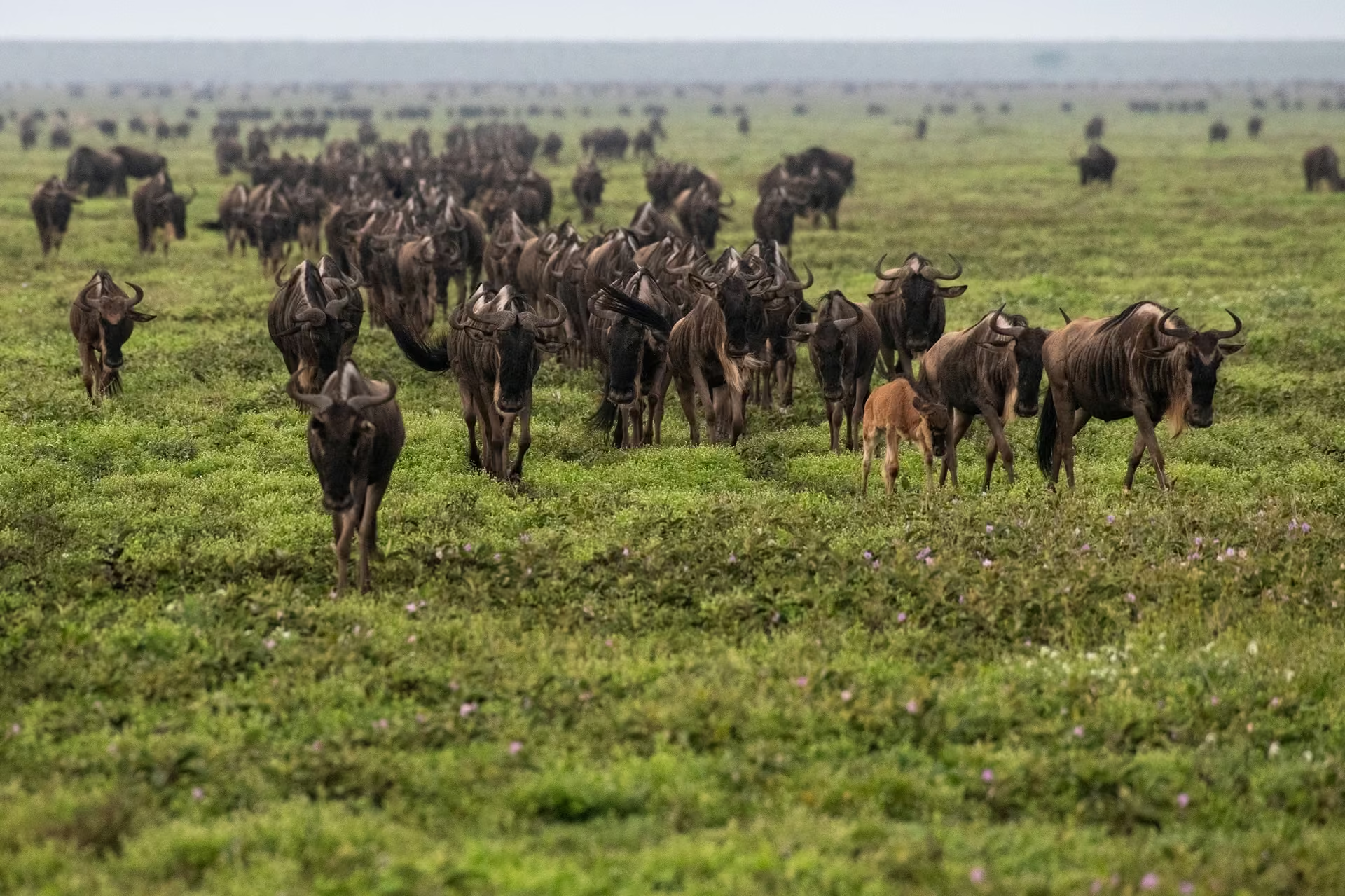
Approximately 1.5 million wildebeest, together with hundreds of thousands of zebras and gazelles, move continuously through the Serengeti ecosystem in search of fresh grazing and water.
The migration does not occur in one fixed location throughout the year. Instead, wildlife movements change according to rainfall, grass growth and seasonal conditions.
Calving Season
During approximately January through March, huge concentrations of wildebeest gather across the southern Serengeti and Ndutu plains.
Thousands of calves are born during a relatively short period.
The abundance of young animals attracts predators, creating exceptional opportunities to observe:
- Lions hunting
- Cheetahs chasing gazelles
- Hyenas patrolling the plains
- Large wildebeest nursery herds
- Intense predator and prey interactions
Migration Toward Central Serengeti
As conditions become drier in the south, the herds gradually begin moving toward central and western parts of the ecosystem.
Long columns of wildebeest and zebra can sometimes stretch across the plains.
Western Migration
During parts of the dry season, migration herds may move through the Western Corridor.
River crossings and predator activity can create dramatic wildlife encounters.
Northern Migration and Mara River Crossings
During approximately July through October, large herds frequently move toward northern Serengeti.
The Mara River crossings are among the most dramatic moments of the migration.
Thousands of wildebeest may gather along riverbanks before suddenly entering the water.
These crossings are unpredictable, making them especially exciting for safari travellers.
It is important to understand that nature follows rainfall rather than a fixed timetable. A knowledgeable safari operator can help travellers choose the best region based on the season of travel.
Accessibility and How to Reach Serengeti National Park
Serengeti National Park can be accessed by both road and air.
Many Tanzania safari itineraries begin in Arusha, the country’s main gateway to the Northern Safari Circuit.
Travelling by Road
From Arusha, most overland safari routes travel through destinations such as:
- Lake Manyara
- Karatu
- Ngorongoro Conservation Area
- Ngorongoro Crater
before entering Serengeti National Park.
Depending on the route, stops and road conditions, travelling from Arusha to central Serengeti may take much of the day.
The long drive, however, becomes part of the safari experience as travellers pass through changing landscapes, villages, highlands and wildlife areas.
Travelling by Air
Scheduled and charter flights connect Serengeti airstrips with several major tourism centres.
Flights can be particularly useful for travellers seeking:
- Luxury Serengeti safaris
- Shorter travel times
- Honeymoon safaris
- Fly in safari packages
- Premium safari holidays
- Safari and Zanzibar combinations
Several airstrips serve different areas of the park, allowing travellers to fly relatively close to their selected safari camp or lodge.
Best Time to Visit Serengeti National Park
One of the great advantages of Serengeti National Park is that wildlife can be seen throughout the year.
However, the best time to visit depends on the experience you want.
January to March
This period is particularly attractive for travellers interested in the wildebeest calving season.
Southern Serengeti and nearby Ndutu become major wildlife areas as large herds gather on nutrient rich grasslands.
Predator sightings can be exceptional during this period.
April and May
These months traditionally fall within the wetter season.
The landscape becomes green and beautiful, wildlife remains abundant and visitor numbers may be lower than during peak travel months.
Travellers who do not mind occasional rain can experience:
- Lush landscapes
- Excellent photography
- Fewer safari vehicles
- Good wildlife sightings
June
Migration herds gradually move through western and central sections of the ecosystem.
This can be an excellent period for safari travellers seeking both resident wildlife and moving migration herds.
July to October
This is one of the most popular periods for Serengeti safari holidays.
Northern Serengeti becomes particularly important as migration herds move toward the Mara River.
Wildlife viewing is generally excellent, and the dry season often makes animals easier to locate around permanent water sources.
November and December
Short seasonal rains can transform the plains into fresh green landscapes.
Migration herds often begin moving southward again, although their exact locations depend on rainfall conditions.
This period can provide excellent safari photography and rewarding wildlife experiences.
Common Activities in Serengeti National Park
Serengeti National Park offers far more than simply driving through the grasslands.
Game Drives
Game drives remain the primary activity in the Serengeti.
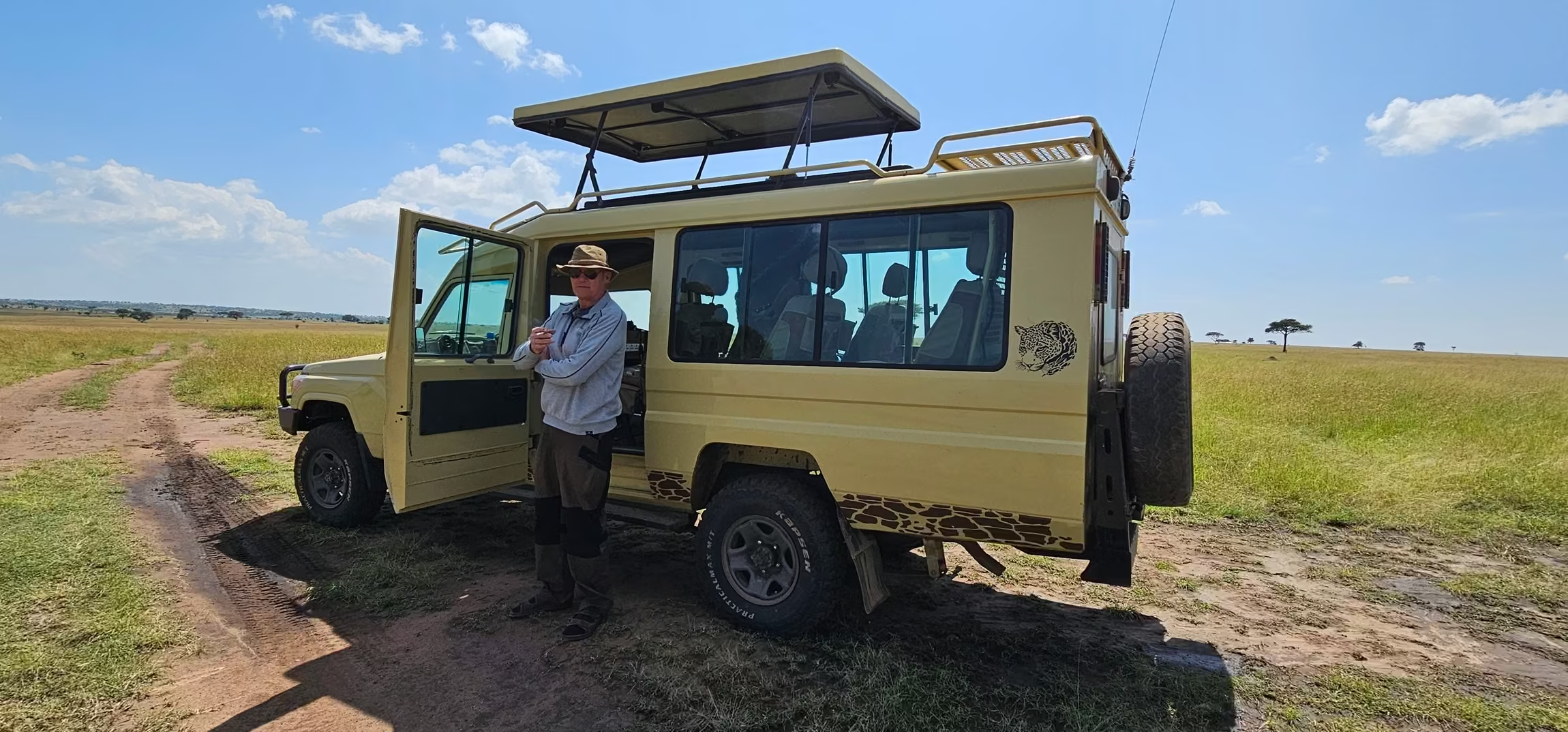
Travellers explore different habitats in specially designed safari vehicles while professional guides search for wildlife.
Game drives may be arranged during:
- Early mornings
- Daytime
- Late afternoons
Early morning safaris are particularly rewarding because predators are often active and temperatures remain pleasant.
Great Migration Safaris
Specialised Great Migration safari itineraries are designed around seasonal wildlife movements.
Depending on the time of year, travellers may focus on:
- Calving season
- Predator activity
- Large migrating herds
- Western Corridor movements
- Mara River crossings
Hot Air Balloon Safaris
A Serengeti hot air balloon safari offers one of the most memorable ways to experience the park.
Floating silently above the plains provides a completely different perspective of wildlife and landscapes below.
Balloon safaris are especially popular among honeymooners, photographers and travellers seeking a premium safari experience.
Wildlife Photography
The Serengeti is one of Africa’s greatest wildlife photography destinations.
Photography opportunities include:
- Lions at sunrise
- Cheetahs on open plains
- Elephants beneath acacia trees
- Migration herds
- Wildebeest river crossings
- Dramatic sunsets
- Giraffe silhouettes
- Predator and prey interactions
Bird Watching
Serengeti National Park supports an extraordinary range of birdlife.
Bird watchers can encounter:
- Raptors
- Ostriches
- Secretary birds
- Vultures
- Bustards
- Storks
- Hornbills
- Weaver birds
- Water birds
The wetter seasons can be especially rewarding for bird enthusiasts.
Accommodation Options in Serengeti National Park
Serengeti National Park offers one of the widest selections of safari accommodation in Tanzania.
Travellers can choose from adventurous mobile camps to some of Africa’s finest luxury lodges.
Luxury Safari Lodges
Luxury Serengeti lodges offer premium comfort in spectacular wilderness locations.
Common features may include:
- Spacious suites
- Private terraces
- Swimming pools
- Fine dining
- Panoramic wildlife views
- Personalised safari services
- Premium game drive experiences
These properties are ideal for travellers planning luxury Tanzania safaris, honeymoons and special celebrations.
Luxury Tented Camps
Tented camps provide the atmosphere of traditional African safari travel while maintaining high standards of comfort.
Many luxury tents include:
- Comfortable beds
- Private bathrooms
- Hot showers
- Dining areas
- Private verandas
- Wilderness views
Some camps operate permanently while others move seasonally to remain close to Great Migration routes.
Mobile Migration Camps
Mobile camps are especially suitable for travellers whose main objective is following the Great Wildebeest Migration.
Depending on the season, camps may relocate between:
- Southern Serengeti
- Central Serengeti
- Western Serengeti
- Northern Serengeti
This allows guests to remain closer to wildlife movements.
Mid Range Safari Camps
Mid range accommodation provides a balance between comfort, authentic safari atmosphere and affordability.
These camps are popular with travellers seeking a high quality Serengeti experience without choosing ultra luxury properties.
Public and Special Campsites
For adventurous travellers, camping can provide one of the most immersive ways to experience the Serengeti.
Sleeping under the African sky while hearing distant lions, hyenas and other wildlife can become one of the most unforgettable moments of a Tanzania safari.
Combining Serengeti With Other Tanzania Safari Destinations
Serengeti National Park forms part of Tanzania’s famous Northern Safari Circuit, making it easy to combine with several other extraordinary destinations.
Popular combinations include:
- Serengeti National Park and Ngorongoro Crater
- Serengeti and Tarangire National Park
- Serengeti and Lake Manyara National Park
- Serengeti and Lake Natron
- Serengeti and Arusha National Park
- Serengeti and Mount Kilimanjaro
Many travellers also combine their safari with a Zanzibar beach holiday, creating an itinerary that blends wildlife adventure with tropical relaxation.
A classic Tanzania journey can include climbing Mount Kilimanjaro, exploring the Serengeti, descending into Ngorongoro Crater and finishing beside the turquoise waters of Zanzibar.
Why Visit Serengeti National Park
Few wildlife destinations can match the scale and diversity of the Serengeti.
Travellers choose Serengeti because it offers:
- Exceptional year round wildlife viewing
- The world famous Great Wildebeest Migration
- Outstanding lion and cheetah sightings
- Opportunities to see Africa’s Big Five
- Beautiful landscapes and endless plains
- Luxury lodges and authentic tented camps
- Professional wildlife photography opportunities
- Hot air balloon safari experiences
- Easy combination with Ngorongoro and other northern Tanzania parks
- Excellent safari options for couples, families and groups
- Some of Africa’s most dramatic predator and prey interactions
Whether you are visiting Tanzania for the first time or returning for another African adventure, Serengeti National Park represents the safari experience many travellers have dreamed about for years.
Plan Your Serengeti Safari With Tansania Toll Safaris
There are places you visit and places that remain with you forever. Serengeti National Park belongs to the second category.
Here, mornings begin beneath enormous African skies. Lions move silently through golden grass. Elephants cross distant plains. Wildebeest gather in numbers that seem almost impossible, while sunsets transform the horizon into unforgettable shades of gold.
At Tansania Toll Safaris, based in Arusha, Tanzania, we create personalised Serengeti safari packages designed around your travel dates, interests, accommodation preferences and budget.
Whether you are searching for a Great Migration safari, luxury Serengeti safari, family Tanzania safari, honeymoon safari, private guided safari or Serengeti and Zanzibar holiday, our team can help create a journey that connects you with the very best of Tanzania.
Your Serengeti adventure can include:
- Private safari transportation
- Professional Tanzania safari guides
- Carefully selected Serengeti lodges and camps
- Great Migration focused itineraries
- Hot air balloon safari arrangements
- Airport transfers
- Ngorongoro Crater extensions
- Tarangire and Lake Manyara safari extensions
- Mount Kilimanjaro combinations
- Zanzibar beach holiday extensions
Come and experience the endless plains, legendary wildlife and extraordinary rhythm of the African wilderness with Tansania Toll Safaris. Your Serengeti safari begins in Tanzania, but the memories can stay with you forever.
Your Tanzania Adventure Is Closer Than You Think
Let Us Create Your Perfect Tanzania Safari
Your dream of exploring Tanzania can begin with one simple conversation. Tell us when you would like to travel, how many people will join you and the experiences you hope to enjoy. Our safari specialists will prepare a personalized Tanzania travel proposal based on your interests, preferred accommodation, travel duration and budget. Whether you are planning a Serengeti wildlife safari, a Kilimanjaro climbing adventure, a romantic honeymoon, a family holiday or a complete Tanzania safari and Zanzibar beach experience, we are ready to guide you through every step of the planning process. Contact Tansania Toll Safaris today and begin creating a journey filled with wildlife, discovery, comfort and unforgettable African moments.
Read Reviews

Follow us
- Tansania Toll Safaris
- @tansaniatollsafaris
- Tansania Toll Safaris
- +255 765 148 724
- +255 765 148 724
- sales@tansaniatoll-safaris.de
- Arusha, Tanzania
We Accept